Delegation, Data, and Letting Go
What producing CEL's annual summit taught me about leading through growth
I never sat down, barely ate, and missed most of the programming I had spent four months building. It was one of the most satisfying days I've had as a leader.
As Director of Operations at Critical Ecology Lab (CEL), my first objective was producing the third annual Eco Afro Futures Summit. CEL is a startup environmental research institution, people's think tank, and creative community hub. Eco Afro Futures is our annual summit. Scientists, artists, technologists, policymakers, and community members gather to build across disciplines and reimagine how we relate to the planet.
Here's what that day taught me about leading an organization through growth.
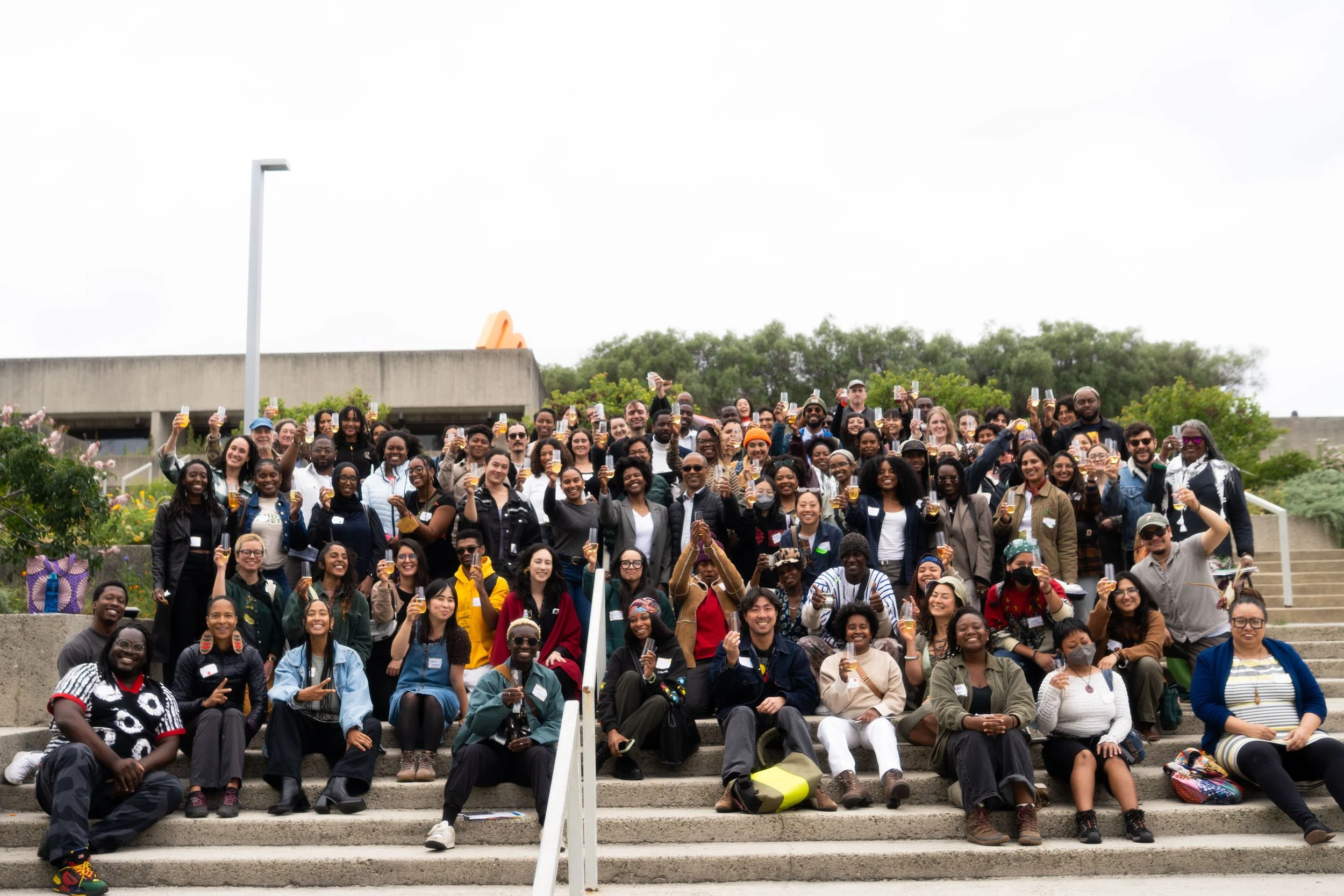
Eco Afro Futures 2026, Oakland Museum of California
Trust your people
Right before guests arrived, I was at the check-in desk, running through a last-minute checklist and mentally preparing for a marathon day. Then people started showing up and I got pulled in three directions at once — scanning codes, answering questions, walking speakers to the auditorium. I texted the volunteer WhatsApp thread and asked for two people to help with check-in. They showed up within minutes, phones already out, app already downloaded from our prep session, and took over. Whew. I was on to the next task.
When lunch arrived mid-event in giant coolers, right as I hit my problem-solving ceiling, volunteers stepped in without being asked. They set up the tables, collected payment, and kept the line moving. One attendee jumped in to help move the coolers. Someone who had come as a participant decided to also volunteer because they wanted to see us succeed.
Operations leaders are usually the ones catching the stray balls. I'm still learning to hand things off and trust that they will be caught without me. I’ve also realized that one way to soothe some of the unease of delegation is to build relationships with mission-aligned people. When the people in the ecosystem (employees, volunteers, customers, the communities you serve) feel aligned, appreciated, and heard, they carry the organization further than any leader could alone. Sometimes leading means building the system with the right people, stepping aside, and giving them room to showcase their strengths.
Eco Afro Futures reminded me what delegation actually looks like. Not just assigning tasks, but building something people want to show up for and defend.
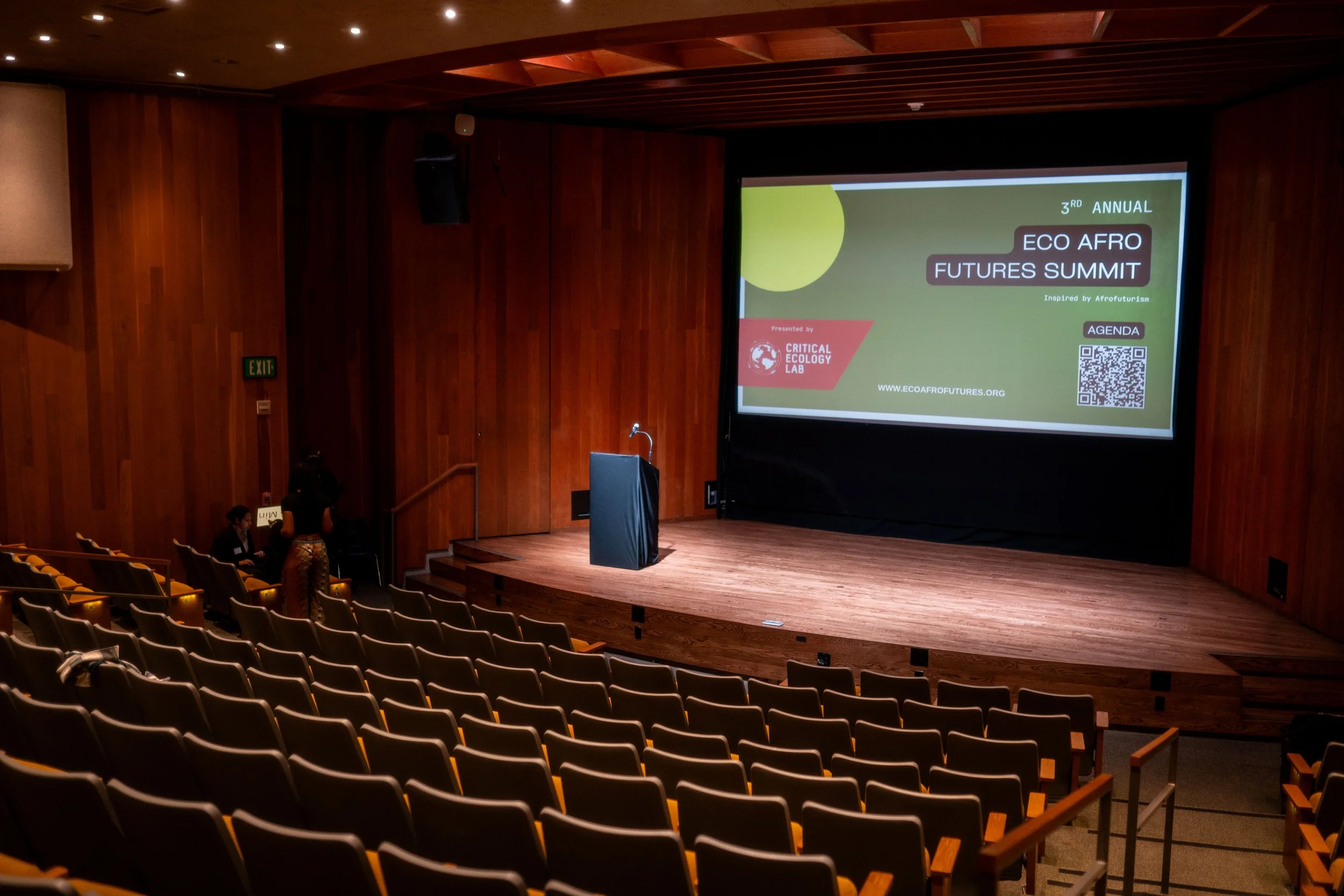
James Moore Theater, Oakland Museum of California
The data is as valuable as the event itself
Nearly 40% of attendees filled out the post-event survey before we adjourned. That surprised me, given how long the day had run. Every single respondent gave the event 5 stars. People had stayed through the opening session, workshops, the closing session and still had enough left to write thoughtful and constructive responses.
I'd spent most of the day running a checklist in my head, trying to keep the experience smooth, and almost missed the community forming in front of me. The surveys are where I caught up to what had actually happened.
People felt seen. The language we used — the framing of climate, community, and identity — gave words to things people had been feeling but didn’t have the vocabulary or technical grounding to name. Reading those responses, I understood something about CEL I hadn't fully grasped before. We are filling a specific gap for BIPOC early- and mid-career climate professionals who need the science and the community together to make sense of the climate crisis they're living through and to see how they can lead change from where they stand.
The survey pulled me out of the minutiae of running the event and into a clearer read of why CEL exists. I'm still using that data for funder impact stories and future projects CEL is developing. Scaling means constantly building an accurate picture of where you stand and where you're headed. The event was one day. Capturing what people actually experienced is what carries us into the next phase.
The unknown can be a gift
I had planned and documented everything I could: run-of-show docs, which workshop leads needed a TV adapter, which side door to use before the venue opened. That's the part of operations I'm good at, and I trust it.
What I couldn't plan for was how people would receive it. A speaker told me the agenda, the music, the food, and the way we had prepped contributors had built something she wanted to be part of again. Several people flew in just to be there for the day. I hadn't built those reactions. I had helped create the conditions for them, and then the room did the rest in ways I couldn’t have scripted. People were taking what we had done and made it theirs: feeling something, connecting with someone, walking away different. This couldn’t be a column on my run-of-show doc.
CEL has already built a following. My job is developing the systems to hold it, then getting out of the way of what it does next.
Eco Afro Futures 2026 Recap
EAF was my first proof point. Everything it taught me goes into crafting what’s next. Find the signal in the data, trust the people you’re building with, and co-create with them.